From the original 8-bit games with pixelated characters to immersive simulations powered by cutting-edge technology, video gaming has come a long way in recent years. With more people having access to powerful computers and various digital devices, playing video games has never been easier or more enjoyable.
Through advances in tech, the barriers that once stood between gamers and their favorite titles have dissipated significantly, allowing for unprecedented accessibility. So what does this mean for modern-day gaming? Read on as we explore how technological advancements have made games more accessible.
Features That Have Made Games More Accessible
Advancements in technology have improved gaming accessibility for players, thereby enhancing inclusivity and broadening the appeal of games to a wider audience.
Adaptive controllers
Adaptive controllers have been a game-changer for gamers, as they are designed to accommodate individual needs and preferences. These controllers, often customizable, can provide an alternative to traditional gaming controllers, which can be difficult or impossible for some people.
For example, some adaptive controllers feature large buttons, triggers, or joysticks, designed to be operated with hands, feet or other body parts. They can also be programmed with macros, allowing players to execute complex actions with a single button press. The widespread adoption and development of these controllers, including the Xbox Adaptive Controller, has helped to make gaming more accessible.
Text-to-speech and speech-to-text features
Another significant advancement in gaming accessibility is the use of text-to-speech (TTS) and speech-to-text (STT) features. TTS allows game audio and text to be converted into speech output, enabling people with visual impairments to participate in previously inaccessible games. For example, TTS can read out game scripts or messages, enabling players to understand the game’s mechanics and storyline fully.
STT, conversely, allows voice input to be converted into text, facilitating gameplay for players who have difficulty using controllers or keyboards. Both TTS and STT features have become increasingly common in games as developers aim to make games more accessible.
Virtual Reality and Augmented Reality
Technologies are transforming the gaming industry by creating more immersive and accessible experiences. VR headsets can be particularly beneficial for gamers with limited mobility, as they allow players to move around and interact with the game environment in a way that is not possible with traditional controllers.
Similarly, AR technologies can help to overlay game elements onto real-world environments, making gaming more inclusive and accessible to players who may not be able to engage in traditional gaming activities.
Mobile gaming
Mobile gaming has become an increasingly important part of the gaming industry as smartphones and tablets have become more sophisticated and powerful. From complex to easy games, players can install their favorite games on their gadgets and play on the go. Overall, this has created new opportunities for gamers of different capabilities, as mobile games can be played on a variety of devices, including those with built-in accessibility features.
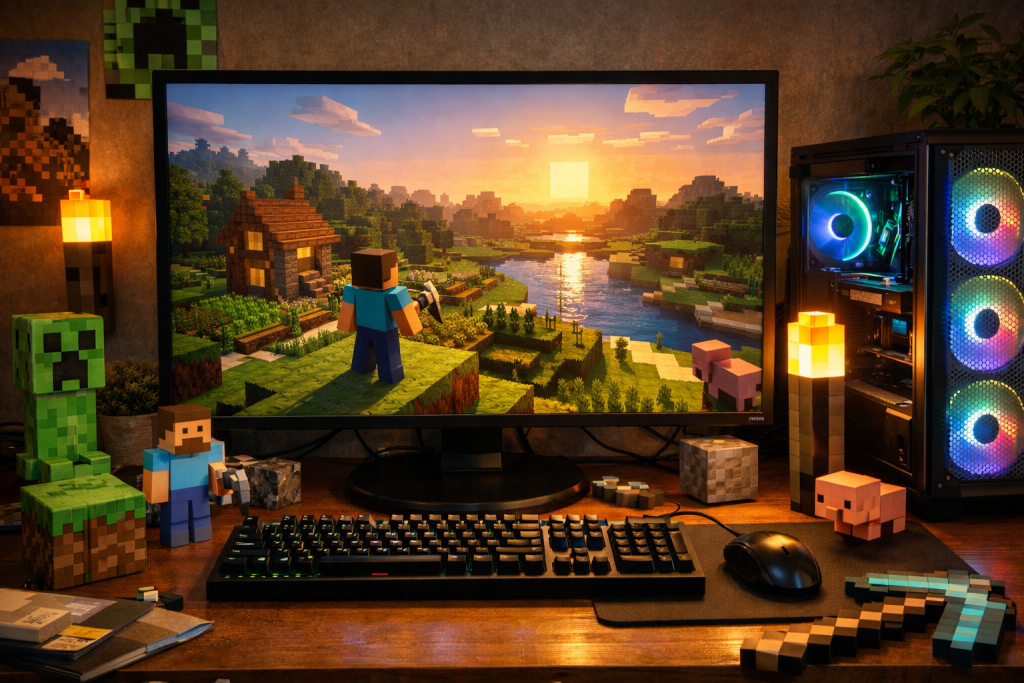
Mobile games are often designed with simplicity in mind, making them an accessible option for a wide variety of players. For instance, if you are a fan of sandbox games, you can play Minecraft free on your Android device, Windows, Vita, or PlayStation. Even better, you can play the game anytime, anywhere, thanks to greater accessibility and flexibility.
Benefits of improved gaming accessibility
Improved gaming accessibility can bring numerous benefits for both gamers and the gaming industry.
- One of the most significant benefits of improved gaming accessibility is that it increases inclusivity for gamers with disabilities. This means that more people can enjoy the immersive world of gaming regardless of their capabilities. Developers can implement accessibility features such as colorblind mode, haptic feedback or control customization to make their games accessible to a wider audience.
- Improved gaming accessibility can create a more immersive game environment, making gaming more enjoyable for everyone, regardless of their level of skill, age or experience. For instance, adding a text-to-speech conversion to help visually challenged players to understand the environment or providing subtitles to help hearing-impaired players can greatly enhance the overall gaming experience.
- It can also expand the gaming market by attracting a wider and more diverse audience. With more gamers preferring accessible games, the demand for such games will increase the revenue generated by gaming companies. Also, by providing more accessibility options, gaming platforms can entice new players who may have been previously deterred based on accessibility challenges.
Future of gaming accessibility
With the rapid advancements in technology, the gaming industry is constantly evolving and improving. As a result, there is a growing focus on making gaming accessible to everyone, regardless of their ability. In the future, we can expect to see even more innovative and exciting features and technologies that improve gaming accessibility.
Conclusion
Improved gaming accessibility has many benefits, including inclusivity for gamers with disabilities, enhanced gaming experience for everyone and expanding the gaming market, making it an important area of focus for the gaming industry.